Building date:
Original use: Schoolhouse, Catholic girls' school
Corner structures: Tooled. Quoins are uniform blocks of limestone, which have been diagonally gouged with roughly parallel grooves, giving the blocks a very rough appearance.
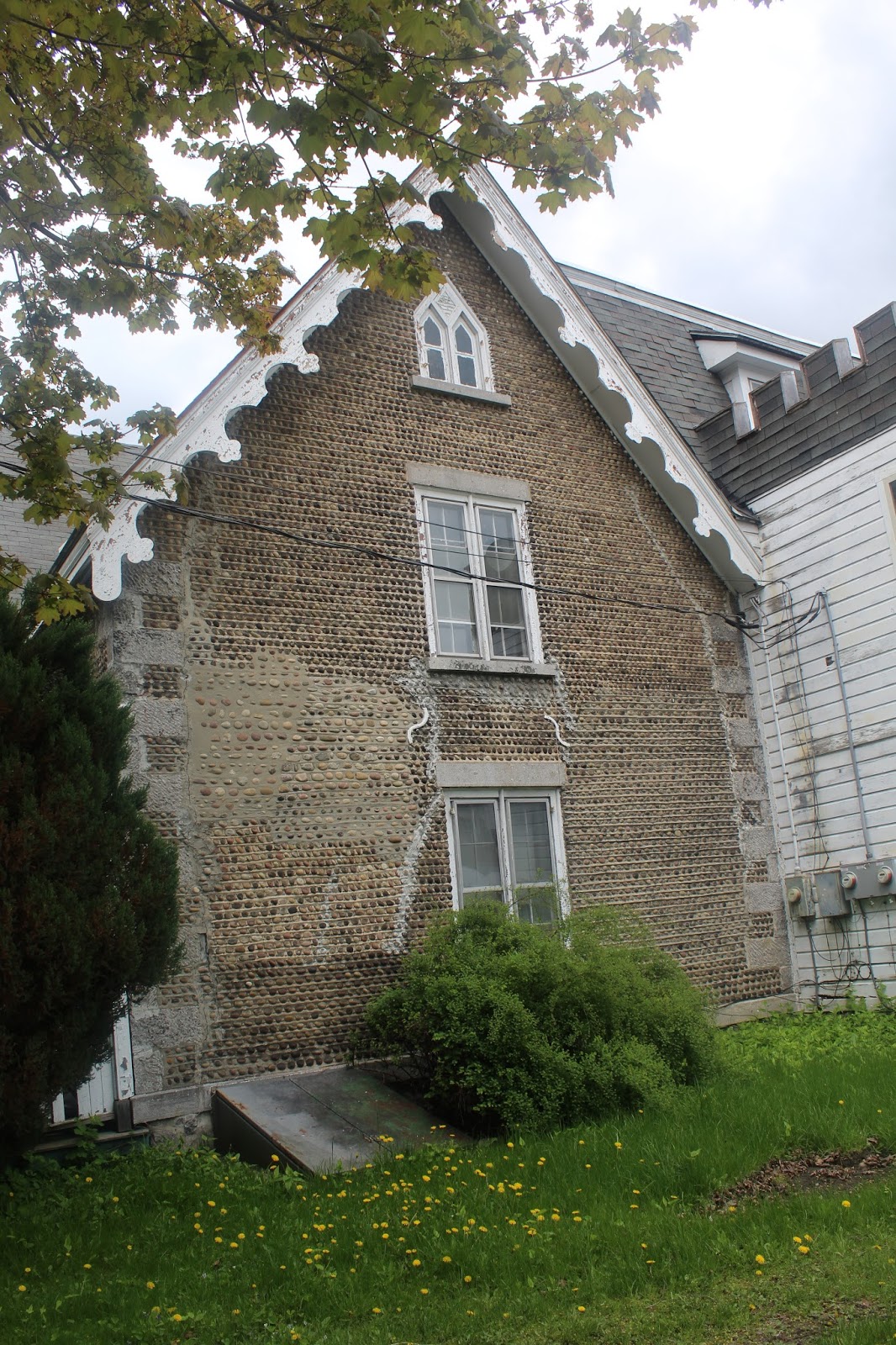
Mortar application and content: The horizontal ridges of mortar come to a point about half way between the rows of stones. Vertical spaces contain truncate pyramid-like raised areas of mortar. The stones between the quoins have mortar of a color differing from that of the remainder of the wall. In addition, the horizontal mortar does not coincide with the horizontals between the quoins; in fact, some of the horizontals in the main wall actually overlap stones in the area between the quoins, which would appear to be impossible if both were laid at the same time. The vertical mortar between the stones in the quoin areas differs from that in the rest of the wall, indicating that the areas were constructed by different masons.
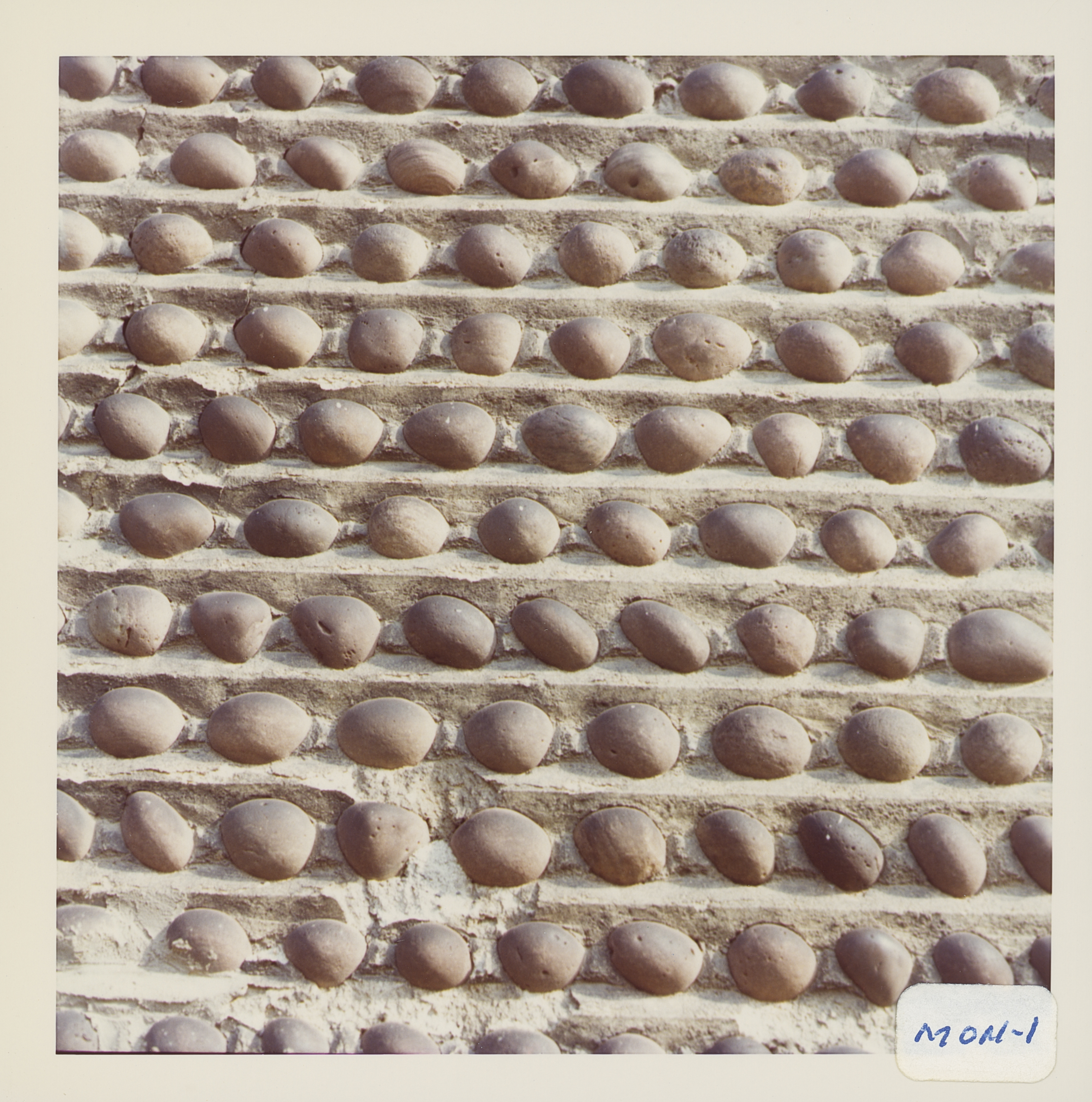
Types and uses of stones: Small red. Stones are smooth round red sandstones set five rows per quoin on both front and side walls.
Types and choice of windows:
Structures with similar masonry details:
Masons who worked on building:
Unique features:
Map views courtesy Google Maps. Address is Google Earth confirmed; 42°56'53.84"N 74°22'16.75"W. Current owner of record, Concord Living/Chaplin as of the 2018 Tax Roll.
Town of Glen and Montgomery County Maps
The Roudabush Survey states 5 Broad St.; however, the correct address is 6 Broad St..
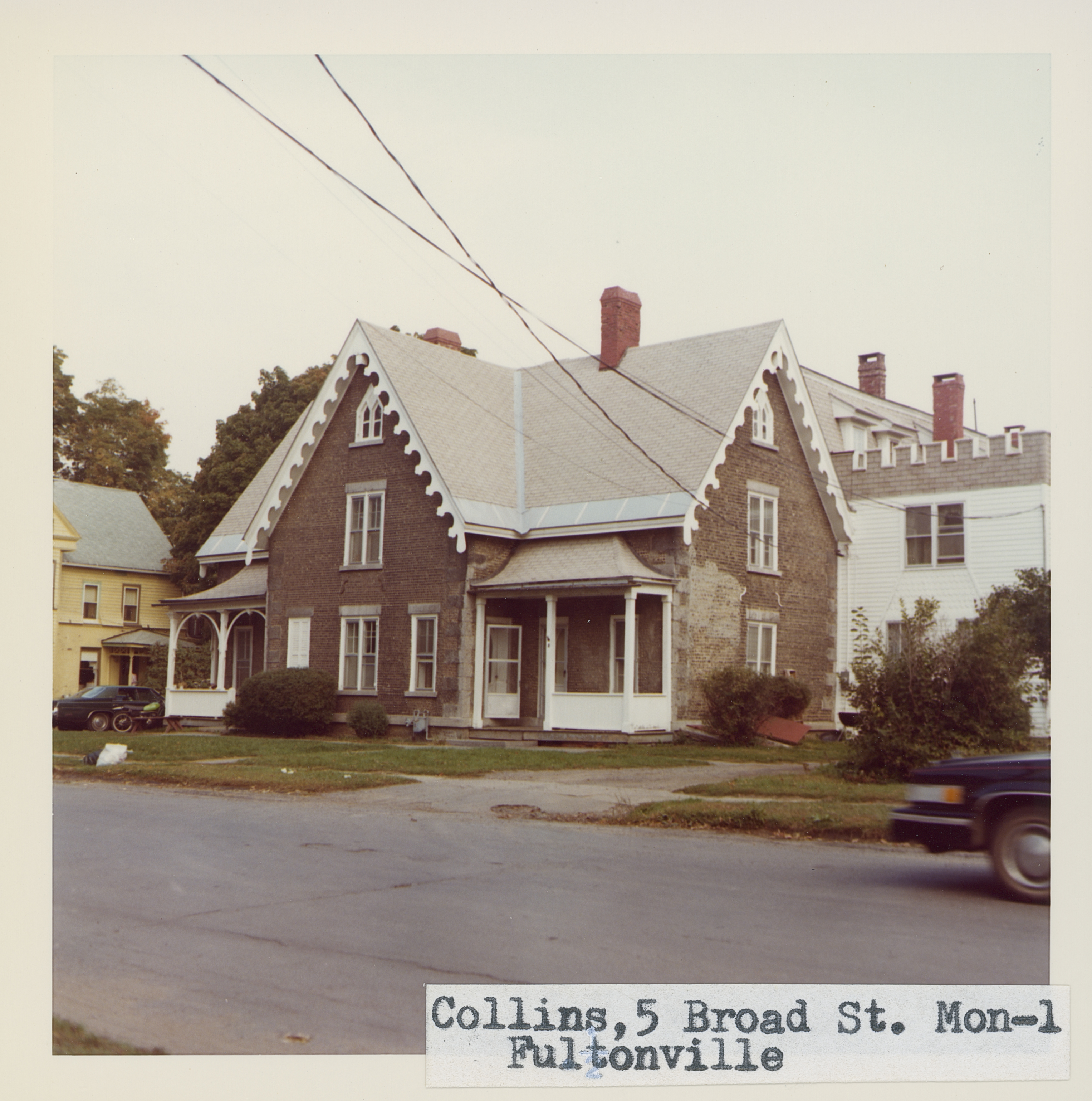
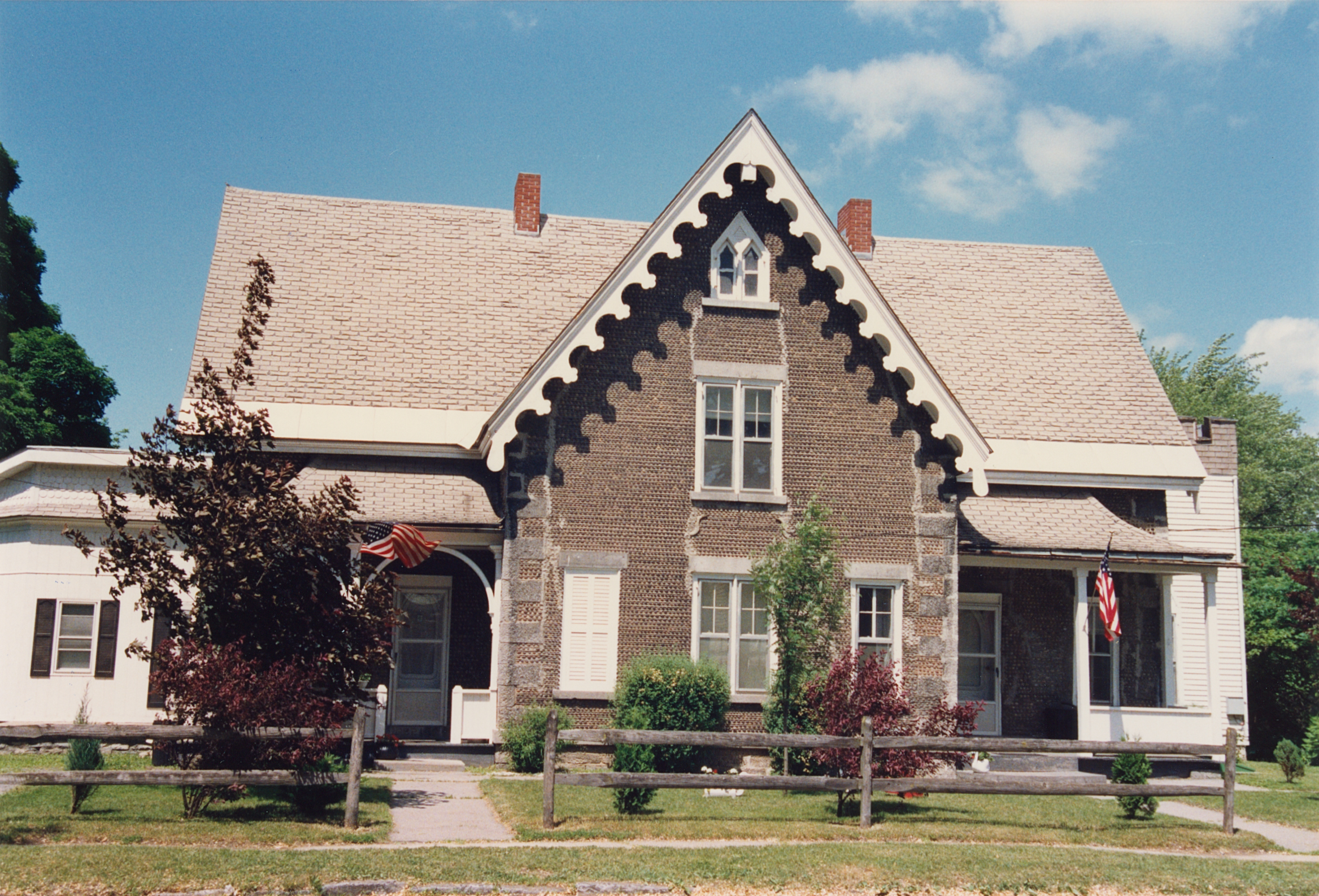
This structure at 5 Broad St., Fultonville, was at one time a Catholic girls' school. There are two front porches, and the door off the left porch has the word "library" inscribed on the door sill, which is in keeping with the reported use of the building.
Quoins are uniform blocks of limestone, which have been diagonally gouged with roughly parallel grooves, giving the blocks a very rough appearance. Stones are smooth round red sandstones set five rows per quoin on both front and side walls. The horizontal ridges of mortar come to a point about half way between the rows of stones. Vertical spaces contain truncate pyramid-like raised areas of mortar.
This house has an apparent significant difference in the way the stones were laid. In other houses, the rows of stones and quoins were apparently raised across the length of the wall at the same time. In Gle-1 Collins Mon-1, the stones between the quoins have mortar of a color differing from that of the remainder of the wall. In addition, the horizontal mortar does not coincide with the horizontals between the quoins; in fact, some of the horizontals in the main wall actually overlap stones in the area between the quoins, which would appear to be impossible if both were laid at the same time. The vertical mortar between the stones in the quoin areas differs from that in the rest of the wall, indicating that the areas were constructed by different masons. Roudabush Survey page 70
"The Cobblestone Houses of Upstate New York", compiled by Dorothy Wells Pease. Research done in collaboration with Hazel B. Jeffery, supplemented with material furnished by Carl F. Schmidt, 1941. Reference the seventh paragraph on page 42.
Jeptha R. Simms biography. Provided by Mr. Edward J. Sheehan, County Historian and Archivist, Montgomery County, Fonda, N. Y., 3/30/1955.
Jeptha Root Simms (December 31, 1807 - May 31, 1883) had this Gothic-style house built in 1850. Wooden additions were added in 1883. was an American historian best known for chronicling the settlement of upstate New York. Simms was born at Canterbury, Connecticut on December 31, 1807, son of Joseph Simms and the former Phoebe Fitch.
He had this house built in the popular Gothic Cottage style of the day. The water-rounded stones are said to have been gathered locally. In 1883 the wood wing with the crenellated parapet was added.
His family moved to Plainfield, New York in 1824. He married April 1, 1833, to Catherine Lawyer of Schoharie, New York. He died May 31, 1883 in Fort Plain, New York, age 75. Simms was largely self-educated. He became an acknowledged authority on the history and geology of upstate New York through years of personal interviews with the region's oldest surviving residents and collecting fossils and mineral samples.
The interviews became the backbone of his subsequent writings, while his geological collection was eventually purchased by the State of New York for $5,000 (an impressive sum at the time). As a young man, Simms worked at Canajoharie, New York, but removed to New York City in 1829. A few years later, he returned to upstate New York and began compiling his collection of historical material while working as a railroad ticket agent. He was best known for his books, including The Frontiersmen of New York: Showing Customs of the Indians, Vicissitudes of the Pioneer White Settlers, and Border Strife in Two Wars (Volume 1 in 1882 and Volume 2 posthumously in 1883).
2018 tax roll lists the property as a 3 family residence.
- "Cobblestone Landmarks of New York State", 1978, by Olaf William Shelgren, Jr., Cary Lattin, and Robert W. Frasch, Photographs by Gerda Peterich: Name reference, Simms House
- Page 160
- "The Era of Cobblestone Architecture", unpublished manuscript 1972. To access the manuscript content about this structure, see 46. Montgomery County, Simms-Collins House. Editor's Note: The architectural term "crenellated parapet" refers to the roof line of the frame addition at the right rear of the house.
 Jeptha_Root_Simms.jpg ¹ Portrait of Jeptha Root Simms | 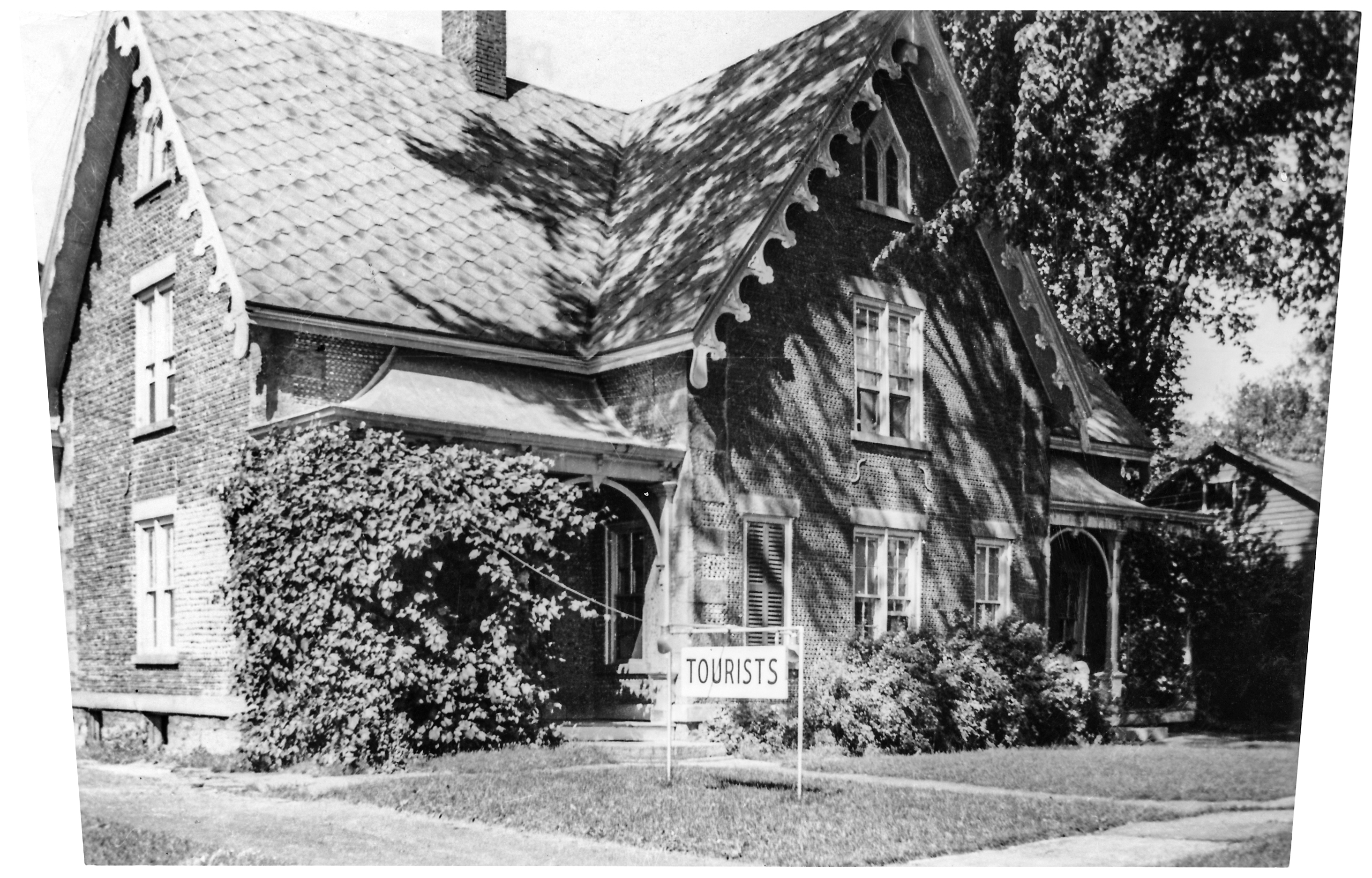 Gle-1 Collins Mon-1 1.jpg ² | 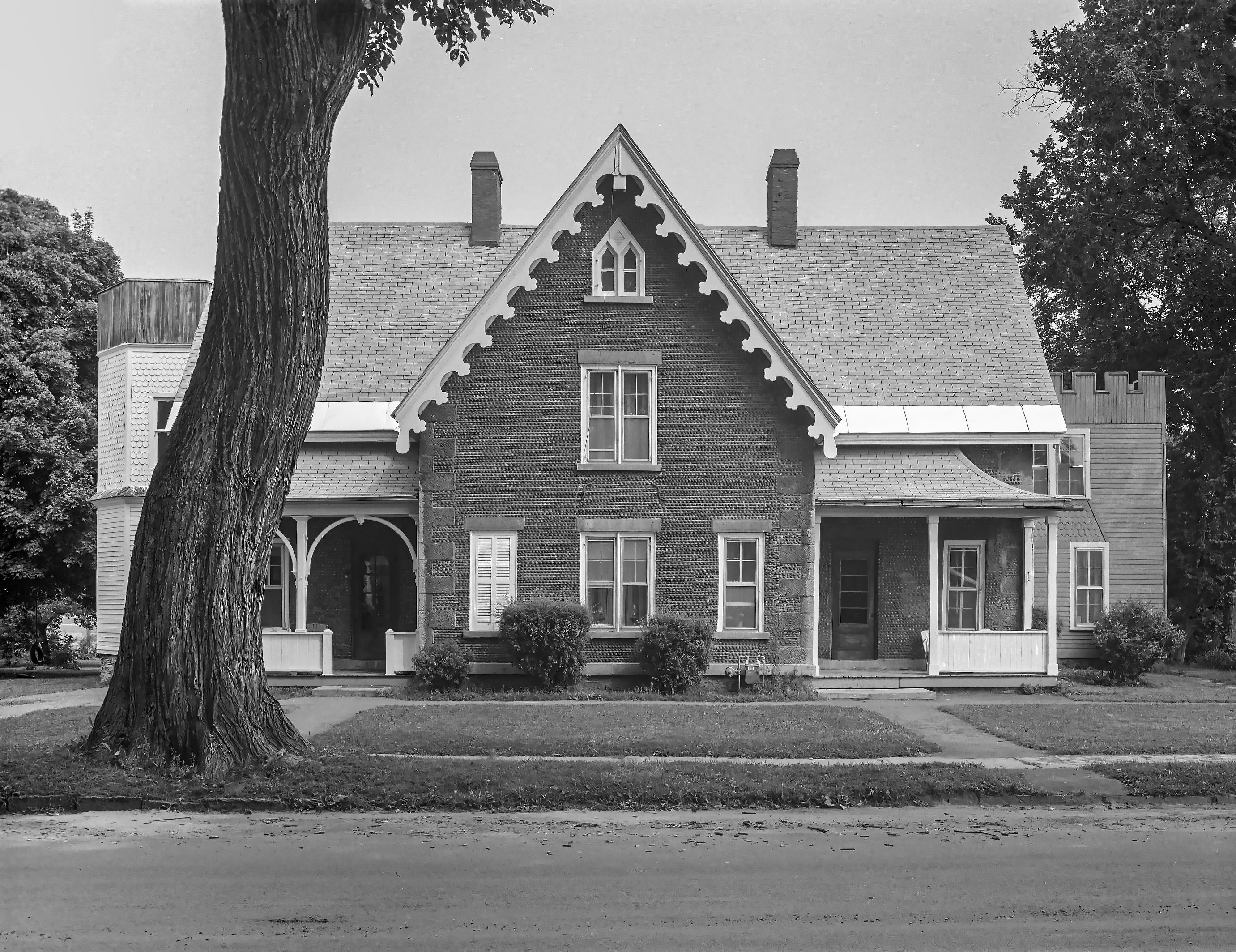 GP Montgomery Glen Gle-1_1 N.jpg ³ August 1971 | 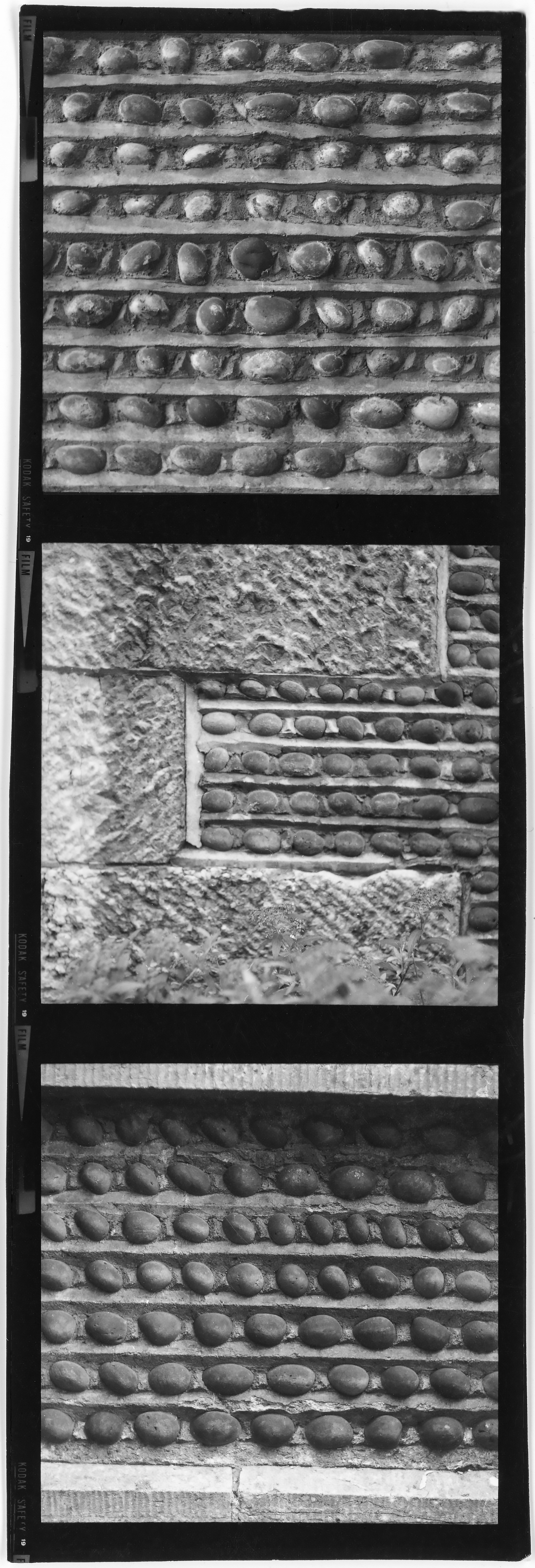 GP Montgomery Glen Gle-1_5 P.jpg ³ August 1971 |
 Gle_1_1.jpg | 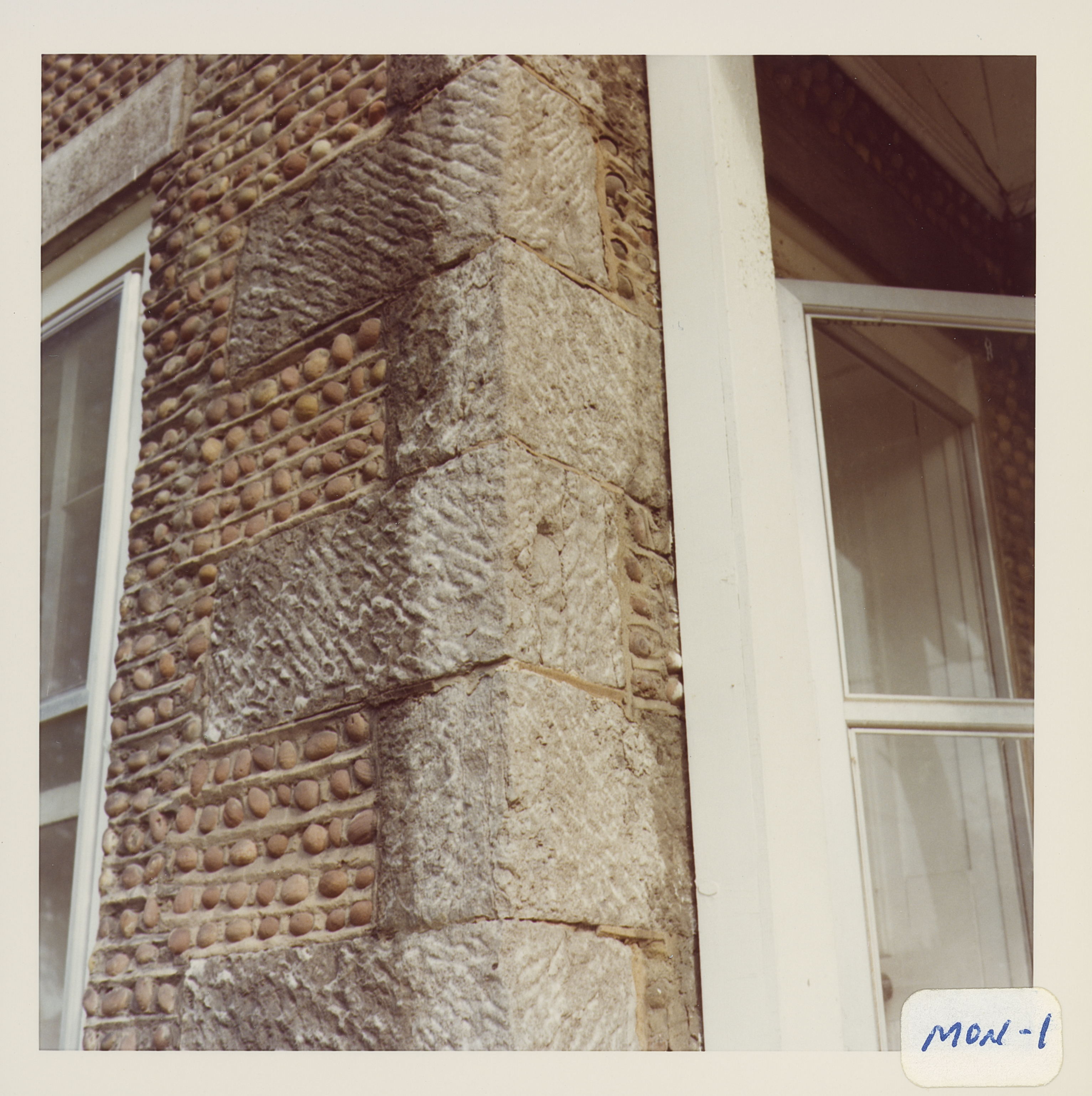 Gle_1_2.jpg | 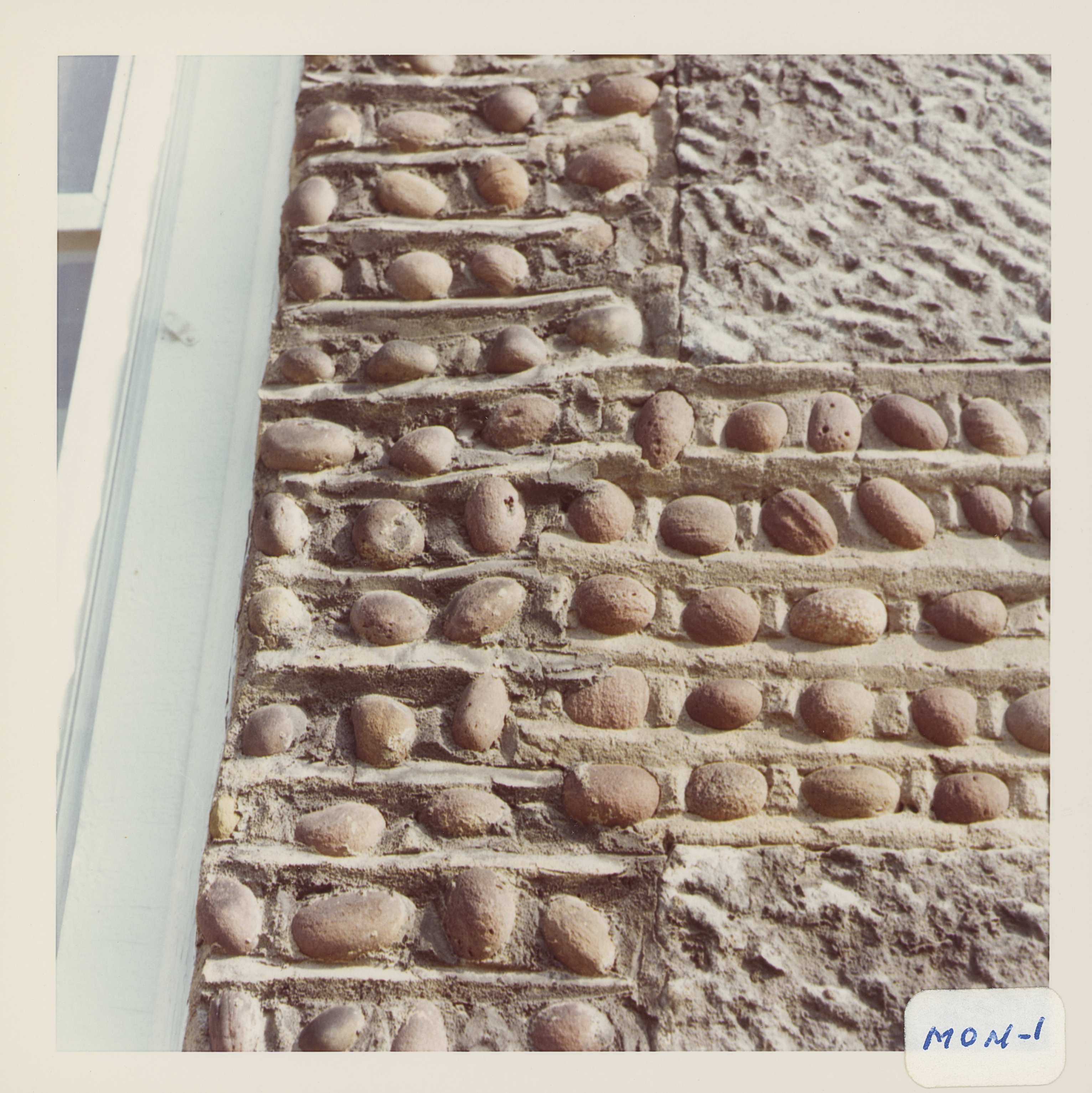 Gle_1_3.jpg | 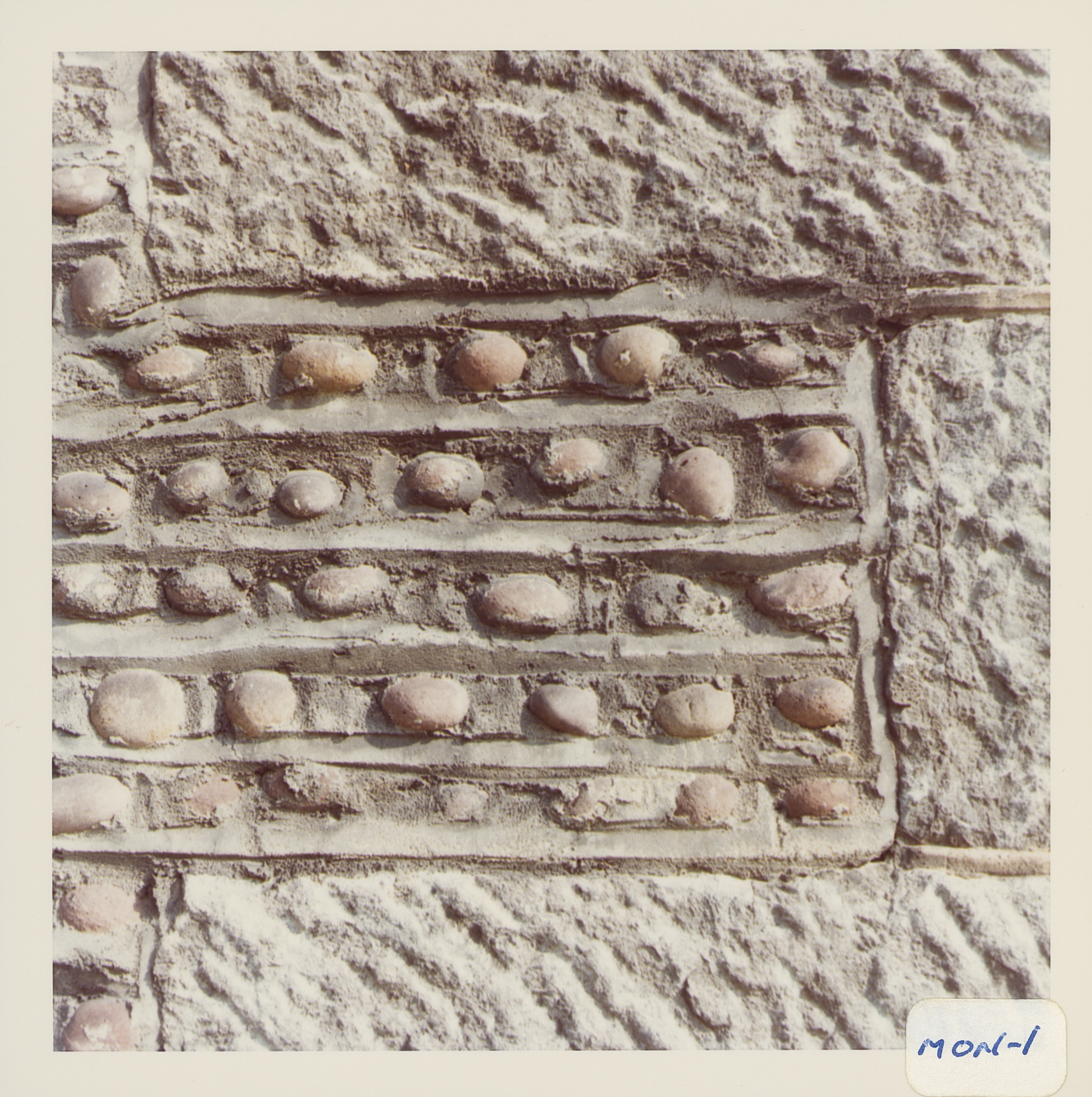 Gle_1_4.jpg |
 Gle_1_5.jpg | 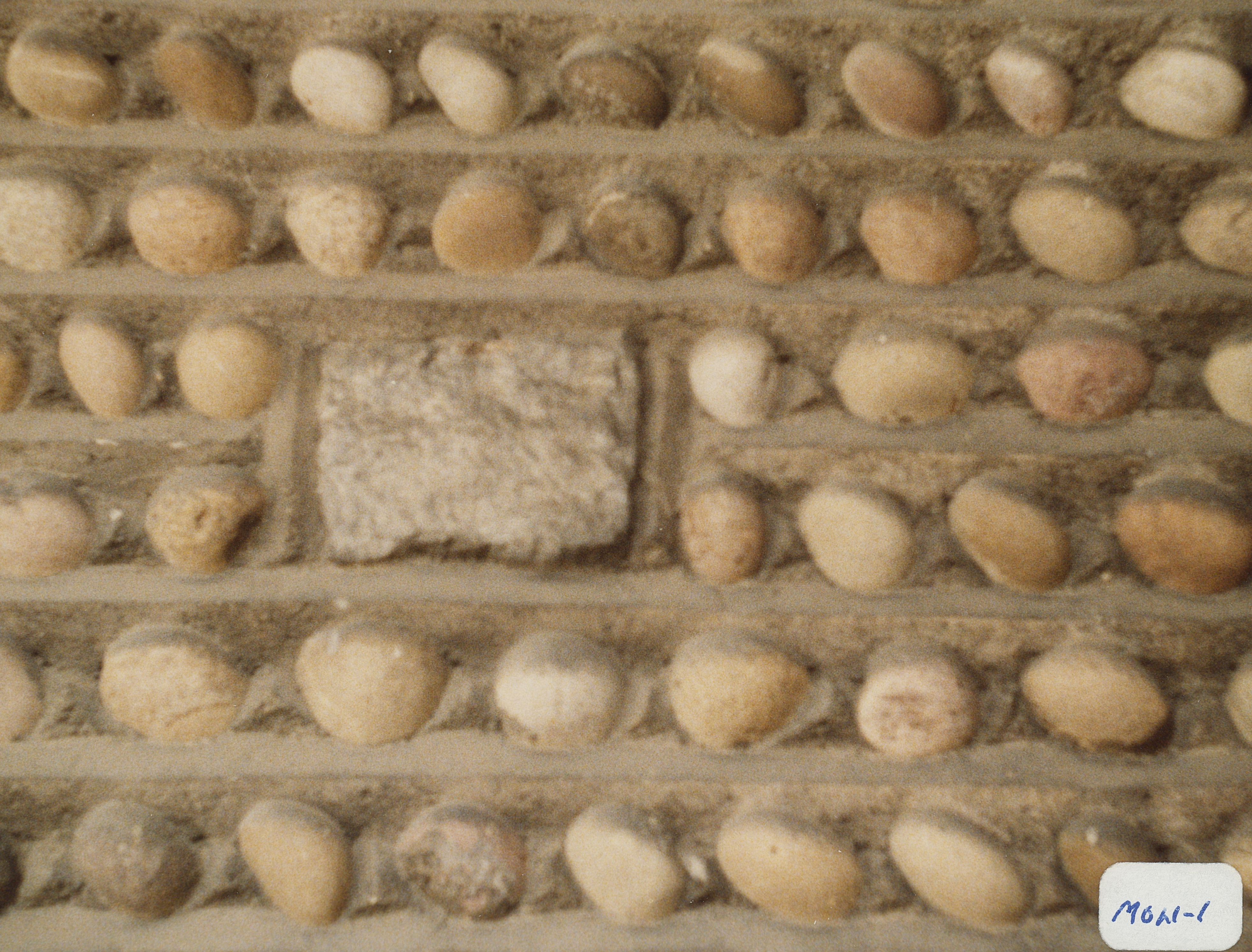 Gle_1_6.jpg | 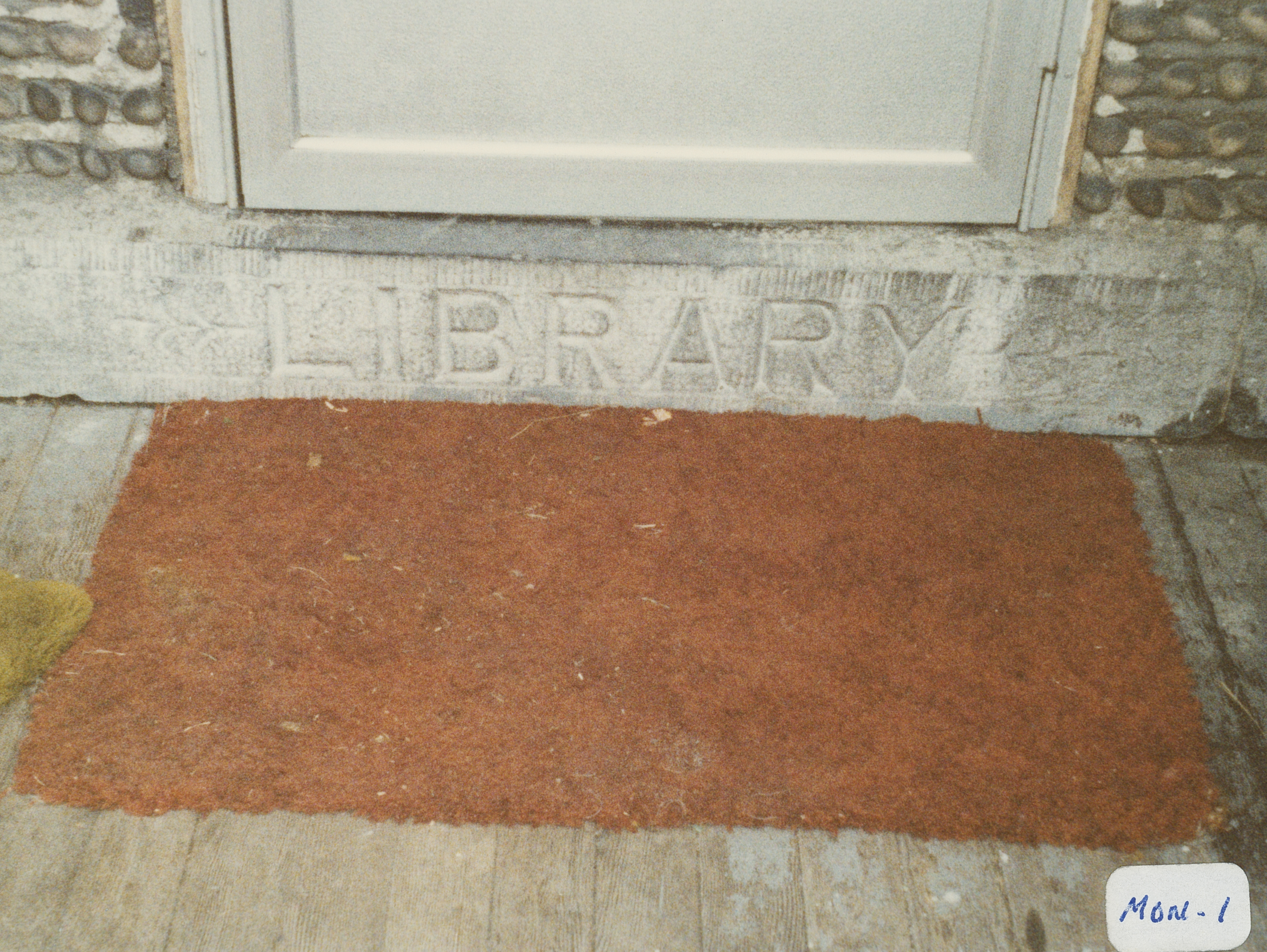 Gle_1_7.jpg | 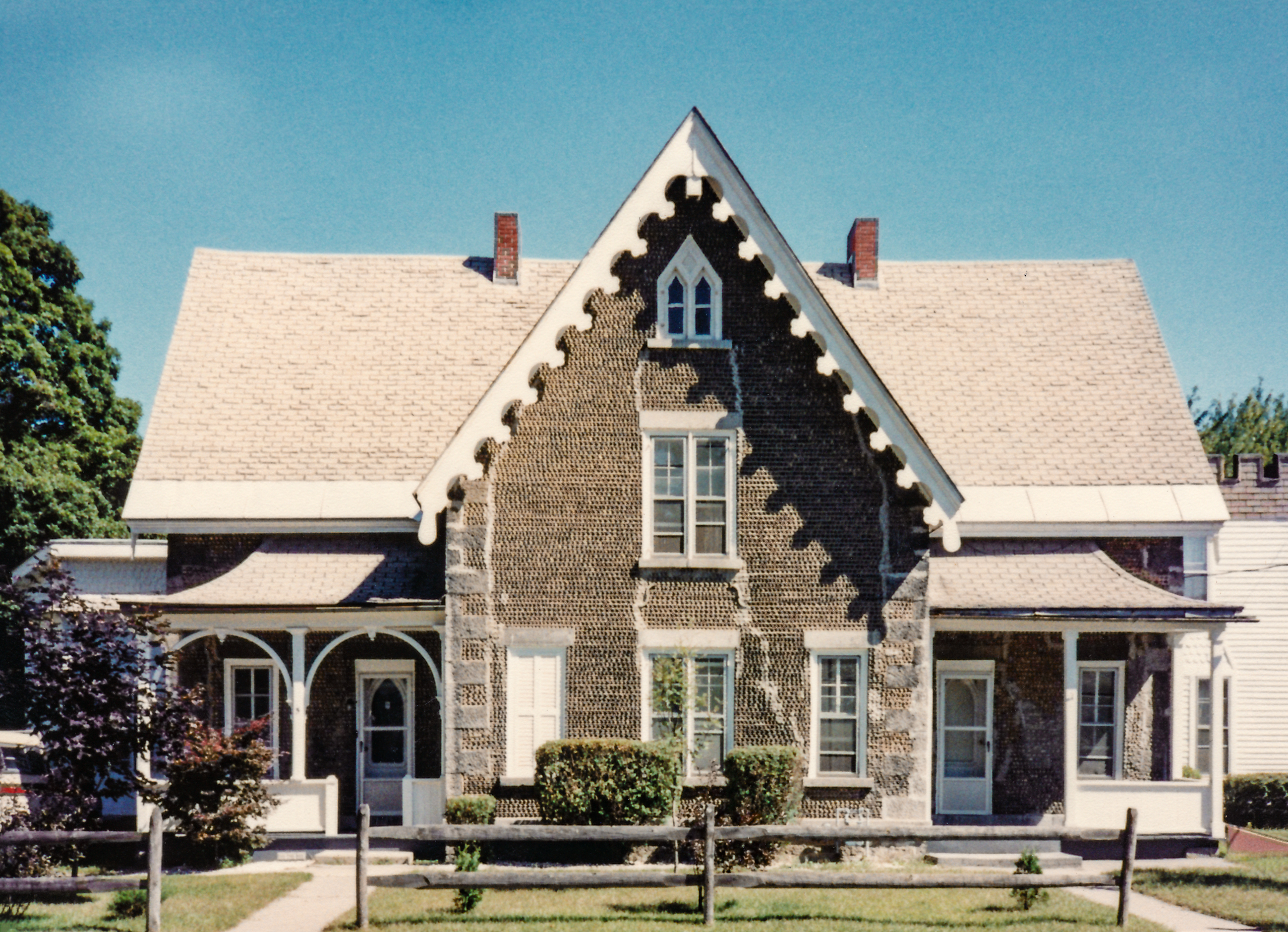 Gle-1 Collins Mon-1 2.jpg ² |
 Gle-1 6 Broad St 1.jpg 4 | 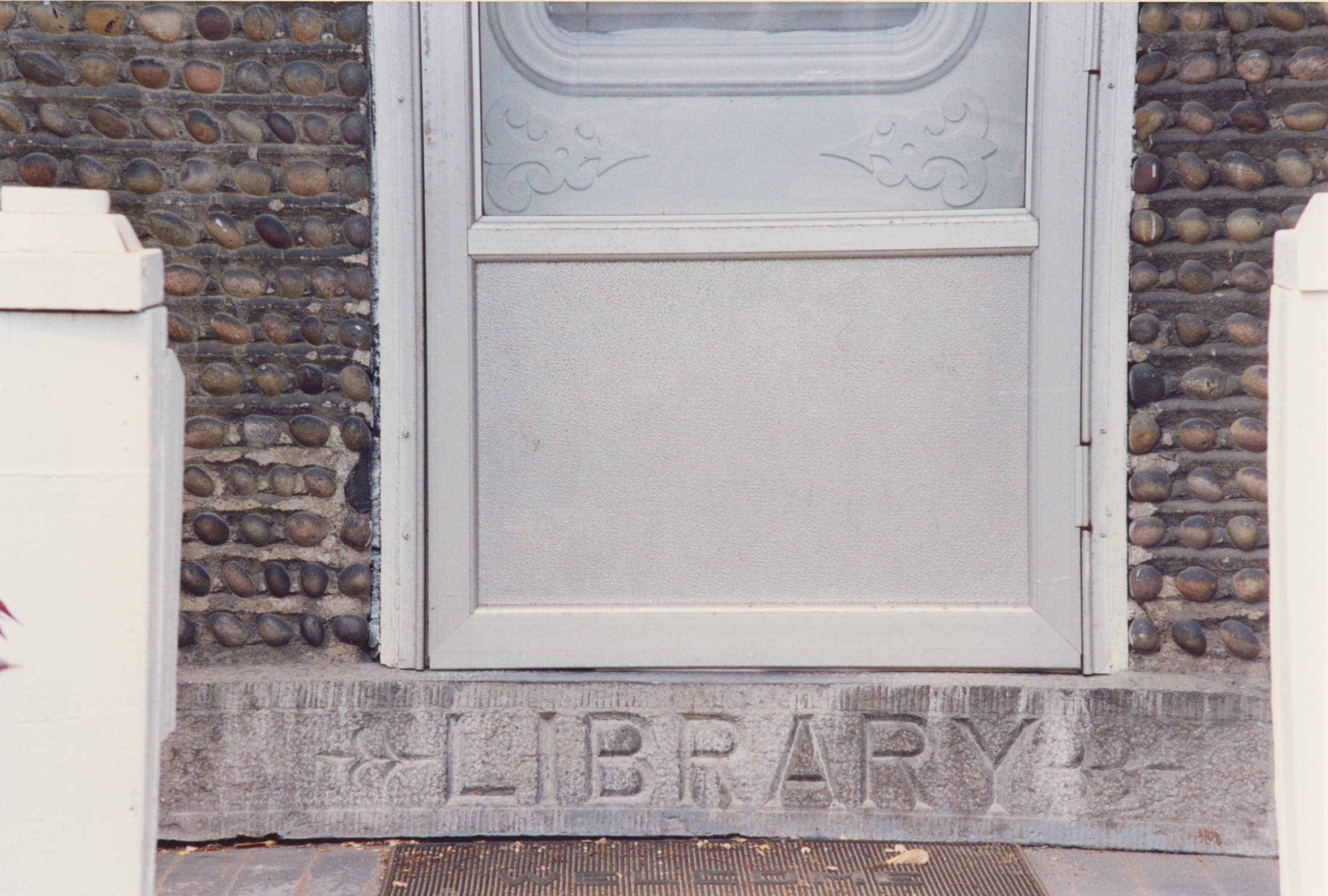 Gle-1 6 Broad St 2.jpg 4 | 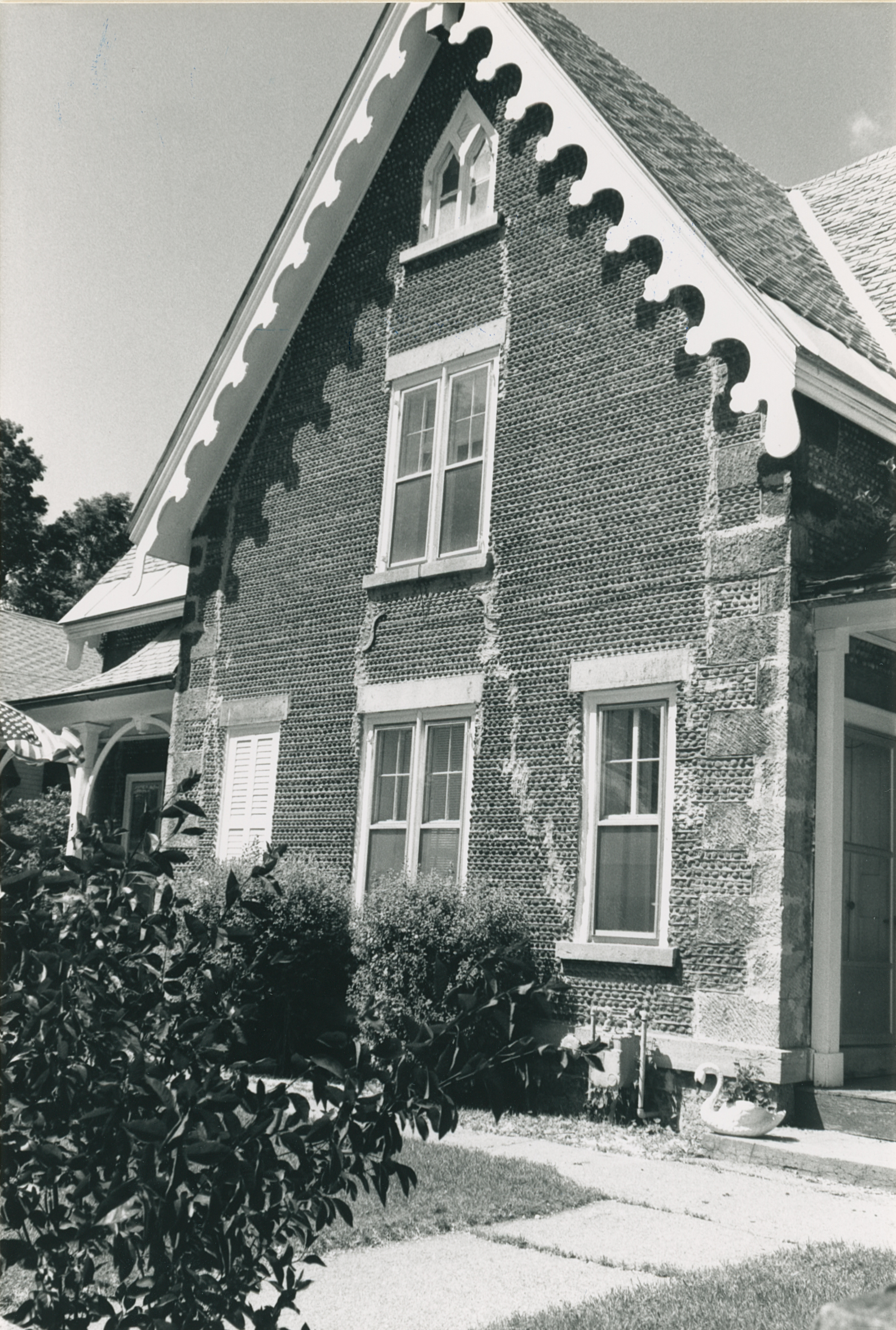 Gle-1 6 Broad St 3.jpg 4 | 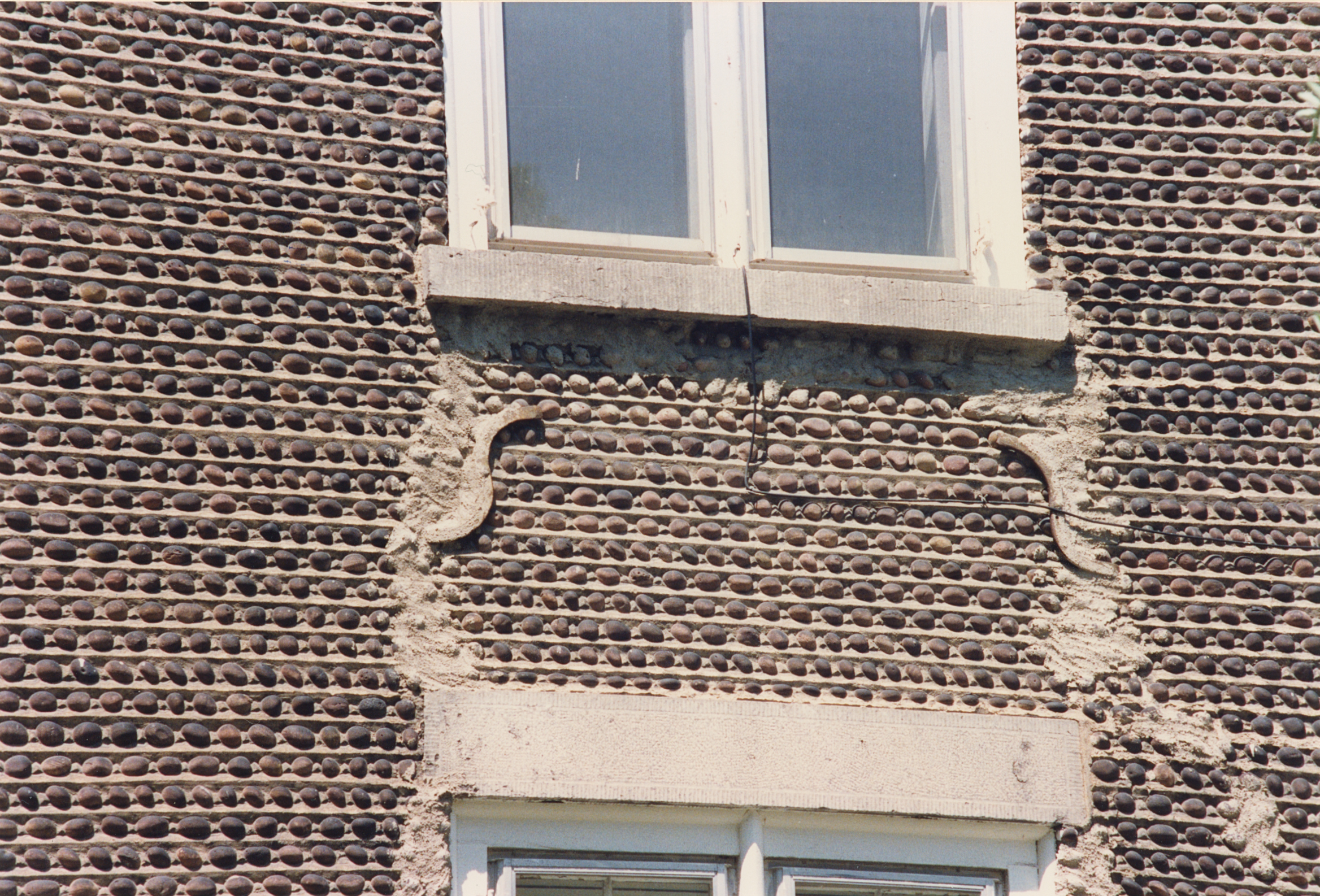 Gle-1 6 Broad St 4.jpg 4 |
 Gle-1 6 Broad St 5.jpg 4 | 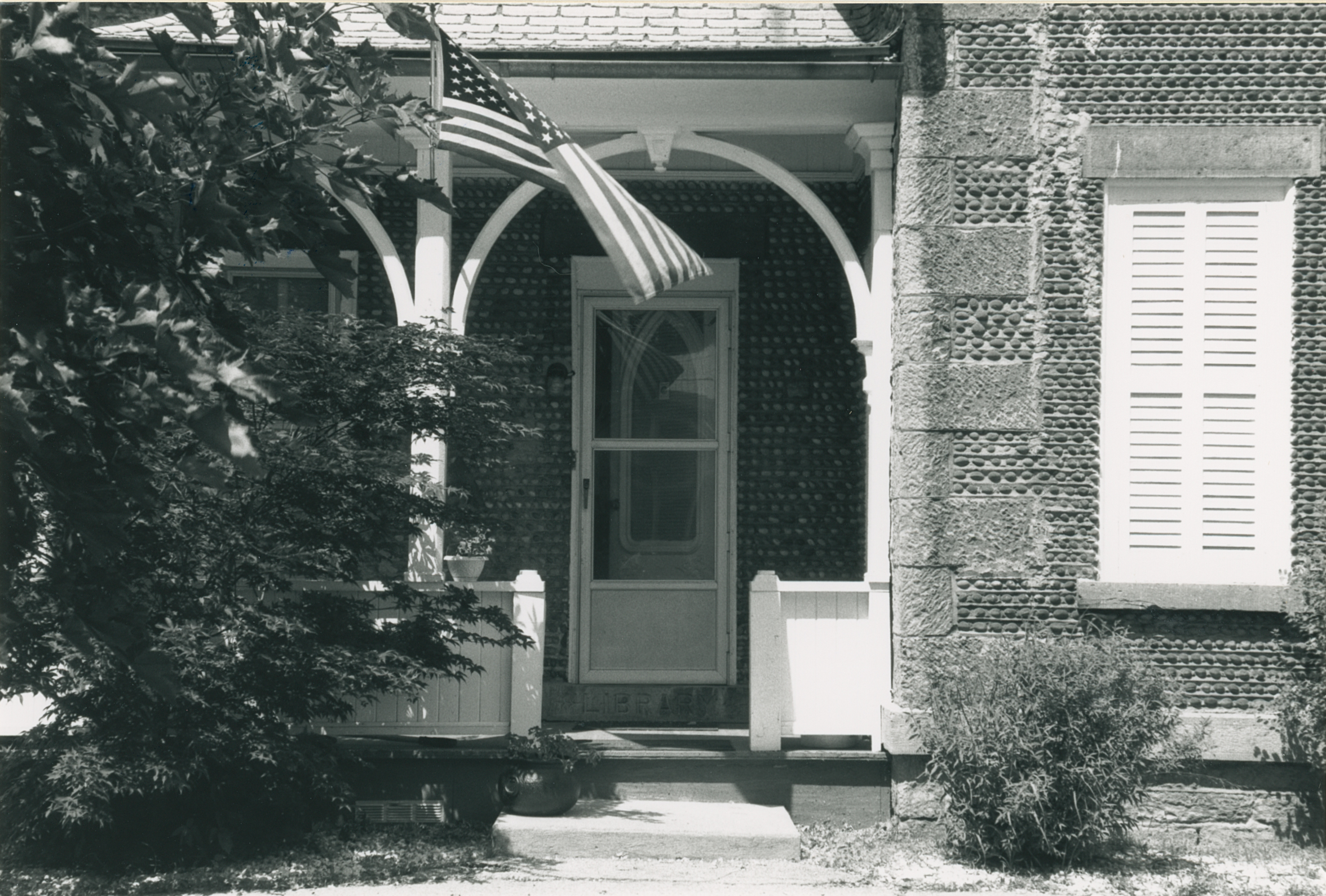 Gle-1 6 Broad St 6.jpg 4 | 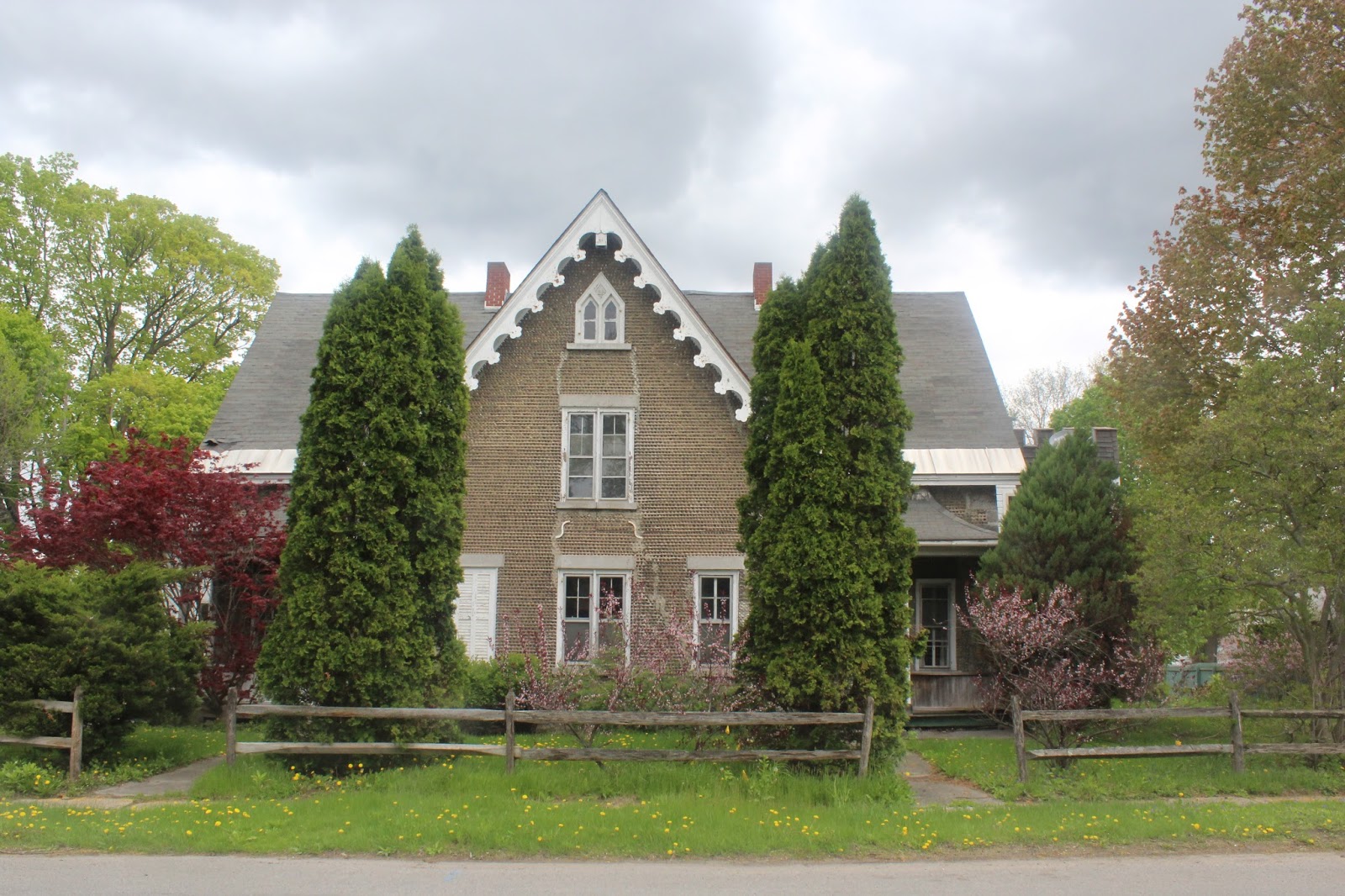 6 Broad St., Fultonville.jpg 5 |  6 Broad St., Fultonville - 2.jpg 5 |
 6 Broad St., Fultonville -3.jpg 5 Very sloppy patchwork reflected here. | .jpg) 6 Broad St., Fultonville (4).jpg 5 Neatly laid washed stones mark the true artistic skill put into this house. | .jpg) 6 Broad St., Fultonville (5).jpg 5 This may have been the entrance to Mr. Simms' private library. |

¹ Image courtesy Richard Palmer. Attribution not provided.
² Image courtesy Cobblestone Museum.
³ Photography courtesy Gerda Peterich. Cobblestone Museum.
4 Photography courtesy Martin and Sheila Wolfish.
5 Photography courtesy Richard Palmer.
